Featured

Blog #1: Back to Dual English

Welcome to the beginning of my Academic blog.

Returning to Class

The 2nd semester of Dual English 1301-1302 began on Wednesday, January 22nd. Through the course of the week, my classmates and I quickly started to integrate ourselves back into the class and pick up from where we left last semester. During class on Wednesday, we went through the syllabus and changes from last semester, one including lab credits now in the form of weekly blog posts. Our discussions included topics of future assignments, late work, and progression through improving our writing skills. On Friday, January 24th, I began preparing for my first writing assignment this semester. The assignment the professor assigned the class and I was to create a resume for a Marvel or DC hero of our choice. I greatly enjoyed this assignment as it was challenging and creative. In short, that concluded the first week back to Dual English 1301-1302.

Rhetoric In Everyday Life

Through the week I have seen, experienced, and even expressed rhetoric, but one encounter I had this week impacted me greater than all the other ones. This weekend as I was driving home from a spiritual youth gathering, I viewed people trying to gain the attention of oncoming drivers, and to my surprise, I was immediately became intrigued as I viewed several cars slow down and hand these individuals cash. My interest peaked when I saw one female get out of her car and hug these individuals. So as I pulled up to the traffic light I rolled down my window and asked what they were fulfilling. They inform me that their church is wanting to build a new building and had trouble paying for the funds to start the construction. After the conversation, I was amazed by how few groups of people were able to raise large amounts of money for such a great cause with barely any advertising. At first I didn’t notice it was a sign of rhetoric, but the I learned that rhetoric was the accomplishment to inspire change, be it big or small.
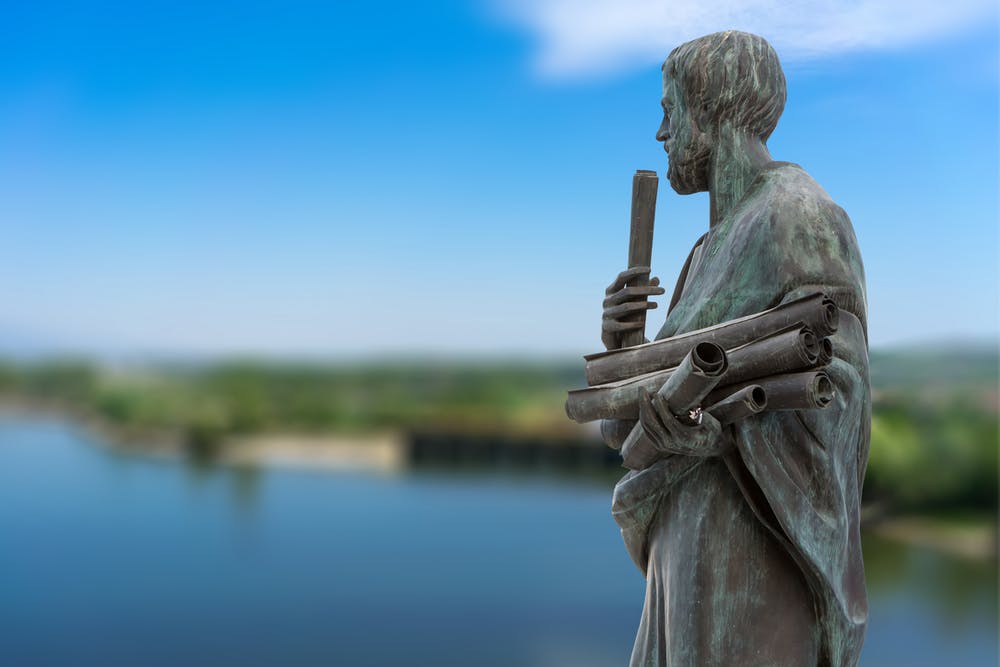
Aristotle and his work In Persuasive writing

Persuasive Writing: Aristotle

“One of the world’s most influential thinkers was the ancient Greek philosopher Aristotle, who lived from 384 to 322 B.C.He wrote about philosophy, poetry, music, biology, zoology, economics and other topics. He also famously wrote about rhetoric and came up with an elaborate and detailed system for understanding both what is persuasive and how to create persuasive messages.” (Arrigo)

Through Aristotle we are able to learn a lot about persuasive writing and how to use rhetorical devices at the utmost effectiveness. In the article from The Conversation, by Anthony Arrigo, we learn that rhetorical devices are greatly used in politics. What has become clear to me is that literary devices can be useful to a person in the work of business,politics, and other careers. As a student learning to use such techniques I never viewed to be useful but simply just a way to get through high school.

Arrigo, Anthony F. The Conversation, 8 Jan. 2020, theconversation.com/what-aristotle-can-teach-us-about-s-rhetoric-107761.

This is the first post on my new blog. I’m just getting this new blog going, so stay tuned for more. Subscribe below to get notified when I post new updates.

Blog #11: Analysis 1

Liberal Education and Politics: The Case of "The Tempest" ~ The ...

This week my class and I were given the task to make an argumentative portfolio to prepare to write a argument paper about either The Tempest or Hamilton: The Musical. In this blog I will analyze one of the articles I am going to use in my paper.

One of the articles I will use in my paper is named The Political Tempest, by David Bahr. Within this article, Bahr goes into to detail and explains how the majority of the conflicts in The Tempest are caused over who holds the most power. He continues by stating the conflicts faced by Caliban, Prospero, Antonio, and Alonso are all similar and are comparable to politics we see today. “Each of Shakespeare’s works, without exception, is political in nature, for each deals with the knowledge needed to govern human affairs at the individual, familial or state level.” Buhr reveals that The Tempest is a reasonable story concerning a wrong act, this capture regarding Prospero’s control by his brother, and Prospero’s hunt to ascertain justice by declaring himself into power. The notion of justice that the play accomplishes appears profoundly biased since this idea signifies the aspect of a character who commands all the other characters. He then concludes his article by explaining how the rest of the play demonstrates how “Prospero exercises his wisdom and is able to regain his former standing in Milan, while marrying off his daughter to the son of the king of Naples and revenging himself on his former foes.”

Blog #10: Rhetoric in a Proposal v. a Paper

As this week concludes, my group and I have been working together produce a project proposal for a new adaptation of The Tempest by William Shakespeare. My group and I were given the task to create a presentation as well as a proposal letter. During this process, we noticed that the use of rhetoric in a proposal has several differences when compared to the use of rhetoric within a regular academic paper. Today in this blog, I am going to clearly state and define the differences between a proposal and an academic paper.

How To Land Your Next Client With a Well Designed Proposal ...

Rhetoric in a Proposal

The central objective of a proposal is to persuade an audience of the value or significance of what you are doing. Usually, proposals are used in government, businesses, and corporations. Proposals typically outline a problem, detail solutions to the problem, and define the costs for solving the problem. Proposals provide information about the qualifications of the person or people suggesting the solution. When funds are sought to conduct the promised work, a detailed budget is provided. More formal proposals contain evaluation information, a plan to evaluate the success of the proposal once it’s implemented. Proposals are arguments that seek particular outcomes from the readers of the proposals. Proposals can offer to trade services for money or goods, proposals can seek funding to conduct research, and proposals might present a call for action.

Similarities and Differences Within a Proposal

Similar to an academic paper, a proposal requires the implementation of logical, emotional, and ethical appeals. Within a proposal however, the use of these appeals are used differently as the basis of presenting these ideas to an audience are for persuading the audience to choose your idea over other’s ideas. The most important appeals within proposals has to be logical and ethical appeals since statistics wealth or growth can be more effective to raise your argument rather than emotional appeals. Visuals and imagery is also very important within a proposal. Another difference between a academic paper and proposal is that within a proposal yo must introduce the problem and persuade the audience on why your solution is the best solution. Proposals are more lenient and imaginative rather than papers, because when it comes to academic papers, their is usually a prompt of some sort where the writer has to be precise and correct to the prompt. While in proposals, an assignment can be conduct with different ideas and still be correct within the guidelines pf the assignment. However, it all depends on if the boss chooses your idea or not.

Rhetoric this Week

As 2020 continues, the COVID-19 virus has created an environment that has everyone around the world terrified. News stations such as FOX and CNN headline the virus everyday for a 24/7 update. Inconsistencies within the government continue to effect society. The number of cases and deaths are growing at a frightening rate and the government is unable to give us many straight answers to straight questions when it comes to testing. Due to rhetoric from the media and news, it is unclear if we will ever get over this pandemic nor if we are close to the end.

Blog #9:Shakespeare Reflection & Rhetoric

Shakespeare Reflection – Youth Voices

This past week, my class and I completed reading and analyzing one of Shakespeare’s most famous plays called The Tempest. Shakespeare has been deceased for about four-hundred years however, his work still lives on as schools and teachers make it a priority for students to learn about Shakespeare. The most important takeaway from analyzing Shakespeare’s work involves his use of rhetoric and how we can use it as well as how it is used in the world today. Today, I am going to share my experiences and takeaways from reading The Tempest, and uncover why Shakespearean Literature is still relevant in modern times.

Reflection & Importance of Rhetoric

The Tempest is a simple tale of betrayal, vengeance, and change told in a mythical setting filled with fairies, monsters, and magic. My experience reading this play was a struggle and a surprise in the same moment. The reason being is I have never read one of Shakespeare’s works before as this was my first time. The language used in this play was difficult to understand but after further reading, it became easier to read and analyze. To my surprise, the message and themes in The Tempest were very similar to historical issues and modern experiences as well. The Tempest addresses this question with a small cast of characters who end up in an unusual situation, on a remote island that’s totally detached from their familiar society. The Tempest demonstrates that people will behave as their society has instructed them to, even when they are completely removed from it. Though they may speak or think of making a “new” society which is better than the one they came from, their actions still reflect their old societal ideals. Here is an example of how Shakespeare’s work reflects on society:

In the story, Caliban tries again to gain power for himself. He encounters Trinculo, a jester; and Stephano, a butler, shortly after the shipwreck. The three of them all share one thing in common: a low place in society. Caliban sees in his new companions an opportunity to escape Prospero’s control. He suggests to Stephano that they kill Prospero, hinting at the good life they would have if Prospero were out of the way. Prospero finds out about their plan with Ariel as his spy and is ready when they come to kill him. The would-be murderers are caught, and Stephano and Trinculo are returned to their masters at the end of the story, as is Caliban. Encouraged by their unusual circumstances and their companionship, they had tried to change their place in society but found themselves still lacking the power to do so. This inability to argue with society’s expectations does not just apply to the lower-class characters of The Tempest, though. When Prospero and Ariel shipwreck Antonio and the other aristocrats on the island, he let one be separated from the rest. This one was Ferdinand, the king’s son. With a song, Ariel leads Ferdinand from the sea to where Prospero and Miranda are. By creating an encounter between his daughter and the king’s son, Prospero intends to have his daughter fall in love with this aristocrat, thus securing a high place in society for her. His plan works and Ferdinand and Miranda immediately take a liking to each other. However, Prospero insists that they do not engage in activities that would not have been considered appropriate for an unmarried couple in the society they came from. When Prospero catches them in a “embrace,” he scolds harshly at them. Though there is no society around to judge Miranda’s or Ferdinand’s character, it is still important to Prospero that the young lovers refrain from anything that would not be approved of by society. These values expressed in The Tempest are exactly how trends, mainstream media, and people around the world interact with each other. The only difference is that the times which we are living are different from the times Shakespeare lived in.

Shakespeare was, and still is, one of the greatest masters of the English in the history of the language. Teachers rightly continue teaching his works as exemplary models of what literature ought to encompass and what an author ought to inspire within his audience. However, teaching Shakespeare merely from a poetic or literary standpoint negates a huge portion of what Shakespeare considered when composing his plays and sonnets: rhetoric. Students can resonate with the prominent message of his play. The scripts are a good source for English literature and knowledge. Shakespeare is the foundation of modern language and therefore it would be severe to remove him and his writings from history.

Rhetoric This Week

With the current outbreak of COVID-19, I have viewed a great majority of rhetoric from the media and news. Such as memes, overbuying, and harassment of those of Asian decent. Largest effect of this rhetoric I have seen is from the President’s statements on the current outbreak. In this climate, it is essential that we reject attempts to find scapegoats instead of solutions, that we rebuff reactionaries who seek to sow division and hate rather than unity and cooperation.

Blog #7: Rhetoric in The Tempest (Acts III-IV)

For the past few weeks, my class and I have been reading one of Shakespeare’s plays called The Tempest. Shakespeare writes his plays to make it where the reader gets to decide and depict the nature of the characters. In The Tempest, this is seen through the likes of Caliban, Ariel, Miranda, and so on. This aspect of the play allowed Shakespeare to create very interesting plays, including the use of rhetoric used within the writing. Today I will be revealing the rhetoric used in Acts III-IV of The Tempest.

Act III

In Act III, Scene I, we see Ferdinand get canceled from the privileges of his rank by Prospero,.Prospero did the same to Caliban by making him a slave as well. Prospero’s action, in this case, might not be fair, but Ferdinand bears it, and in so doing, justifies Prospero’s rule, just as Caliban did. This case again stresses the idea that willful obedience is a valid source of power. Prospero’s tone, when speaking of Ferdinand in this act, is a curious mix of affection and distaste; he refers to Ferdinand as “poor worm,” which could be taken as a statement of endearment. Later on in the scene, Ferdinand and Miranda confess their love for each other. This discussion is deemed as unrealistic and similar to fairy tale love as Ferdinand and Miranda barley know each other. The two are madly in love and declare to get married.In Scene II as characters’ intellect, sovereignty, and feelings become apparent through their language, Caliban’s intelligence, though completely contradicted by his actions, is clear in the words he speaks to Trinculo and Stephano. Caliban begins to speak in lines that resemble the rhythms of poetry; and his speech, in lines 132-141, show great illustration in this allegedly savage man.

Act IV

Prospero stops Ferdinand’s punishment, and decides to finally give Miranda to him, since he has proven his love for her through his service. Prospero accepts the union, but issues them a warning; if Ferdinand takes Miranda’s virginity before a ceremony can be performed, then their union will be cursed. Ferdinand swears to Prospero that they shall wait until the ceremony to consummate their marriage, and then Prospero calls upon Ariel to perform one of his last acts of magic. A betrothal masque is performed for the party by some of Prospero’s magical spirits; Juno, Ceres, and Iris are the goddesses who are represented within the masque, and the play speaks about the bounties of a good marriage, and blesses the happy couple. This act of magic so captivates Prospero that he forgets Caliban’s plot to kill him; for a moment, he almost loses control, but manages to pull himself out of his reverie and take action.

Prospero reduces his daughter, who is intelligent and worthy, to a mere object, wrapping her with the language of exchange when speaking of her to Ferdinand. Prospero refers to his daughter, not by her name, but as a rich gift, compensation for Ferdinand’s pains; he says his daughter has been worthily purchased as an acquisition, further building up his metaphor of his daughter as a thing of exchange. Once again, Prospero almost loses control because he is absorbed by his art; but here, he is able to shake himself from his reverie, and becomes conscious of time again. The moment is important because Prospero is in real danger of losing control, and almost gives up his chance to act because of the pull of his magic. The moment is a eye opening one for Prospero, as he realizes his mortality and his forgetfulness, as well as the limits of his magic.

Rhetoric Through the Week

Yesterday I saw a video of Democrat front runner Joe Biden use a statement that I deemed as very interesting and somewhat surprising. During a speech, the candidate supported Barack Obama and referenced he will use similar governing as the former President. He said he was going to re-establish the value the country had under President Obama. This seemed very effective, as Joe Biden has gained the majority vote within African Americans. Thus Joe Biden is leading in votes within the Democratic Party.

Other rhetoric I have noticed this week involves the current outbreak of COVID-19, or better known as the Coronavirus. This past week my eyes have been opened to how dangerous this outbreak really is, as several events have been canceled that I was looking forward to attend or watch from my couch. Previous to this week, the media and government have been downplaying the danger of this virus. This week the outbreak began to grow all over the world at rapid speed. It came to my knowledge after further research that know one really knows where to begin with a cure. The effects of the advertisements and news of events and schooling being canceled, has led to over buying and economic regression. I believe once we start to think as a collective body, we can beat this virus.

Blog #3: Why should we study Shakespeare?

After the completion of Hamilton, my class and I are beginning to study the works of William Shakespeare and the question we were first presented with was, ”Why is it important to learn or teach about Shakespeare?” Through this blog, I have decided to tackle this question through several aspects, kinda like Shakespeare would but in the Twenty-first century, less educated, teenager.

Image result for shakespeare

Shakespearean Studies

My class and I shortly analyzed and discussed about the play Tempest, and also the author William Shakespeare. William Shakespeare was an English poet. His exact birth date is unknown but estimated to be April 1564 and he died in the month and year April 1616. He is one of the biggest writers of English.He wrote plays, sonnets, poems and narrative poems. His plays are available in many languages and they have been staged several times. One of his most famous plays is known as Tempest. The play is about love, power, betrayal, and forgiveness; the incorporation of magic and strange mythical characters are included in this play. However the play demonstrates a world not so different from the one of today.

Studying and learning from Shakespeare is important because his works are robust and they can enrich a reader’s life in many ways. For instance, his works are very rich in the English language and are a good source of learning the language. Shakespeare contributed many words to the English vocabulary and they are still in use today.While in class getting introduced to the life, background, and achievements of William Shakespeare, I began to become perceptive to the English language. Further, Shakespeare’s works are a challenge because they are not very easy but once a person is able to study them and understand there is a feeling of accomplishment. The language is powerful and through it, one experiences the capability of drama. The messages in his plays are relevant even today. Shakespeare talks about elements such as power and demonstrates how corrupting power can be mainly to greedy people. For instance, in his play-writing named Tempest, he shows how people in power find it difficult to balance their private and public lives and how the people in power manipulate the masses for selfish interests. This can be best attributed to the protagonist Prospero from Tempest, and this is just one example of a characteristic that can be identified in his plays.

Shakespeare has remained relevant through several hundred years. Students can resonate with the prominent message of his play. The scripts are a good source for English literature and knowledge. Shakespeare is the foundation of modern language and therefore it would be severe to remove him and his writings from history.

Rhetoric

  • “I am never ever going to rob anyone for you and never, never ever give in to your sinful wish.”
  • ”I would die if you asked me to sing in front of my parents.”
  • “He is a tiger.”/”He is brave.”

Blog #2: Hamilton and Rhetoric

Image result for hamilton

For the past few weeks, my class and I have been analyzing rhetoric used in the musical Hamilton. I have never seen the musical live but through listening to the songs and reading the lyrics from the first two acts, I have encountered this to be an enjoyable experience. My prior knowledge of Alexander Hamilton’s life was limited to the facts I studied in history; to my surprise, I never thought that Hamilton was such the complicated character the musical depicts him as. The musical has several humorous aspects to it, but the rhetoric displayed in the songwriting is very interesting.

Ex. Rhetoric This Week

  • My Mom convincing me to learn piano
  • Me persuading my cousin to buy a brand new Lexus
  • Democratic Presidential debate that aired on CNN Friday – I was not impressed with the display of persuasion during the debate, as one of the candidates tried to copy former President Obama’s techniques when he first ran for the position. While the rest of the candidates said what the people wanted to hear.

Interesting Rhetoric Used in Hamilton

Act 1 Songs: My Shot and Alexander Hamilton

As a musical, Hamilton uses songs and musical numbers to tell the story of Founding Father Alexander Hamilton. An exciting song opens the musical, with several different supporting characters helping to introduce the so-called protagonist. Not only is the use of music essential to the piece, but also the fact that the music is a blend of traditional melodic musical styles and American pop music, specifically hip-hop and rap. The characters rap their way through the opening number, spinning rhymes out of the biographical information about Hamilton and bringing what might otherwise seem like dry history to vibrant life. Once I heard this piece, I was hooked and gathered my full attention to the movement and dances of the actors on the screen. The one song that stuck with me for the rest of the week was My Shot. A song that illustrates the protagonist’s desires and goals, but I viewed this song as an insight into Hamiltons character as well. With lyrics such as “Hey yo, I’m just like my country; I’m young, scrappy and hungry”, referring to the American Revolution and patriotism. The song repeats this within the chorus to convey its message, other references I noticed was biblical events signifying the similarities towards the theme of not quitting but to be relentless in everything you do.

Act 2 Song: The Story of the Night

In this section, we learn more about the personal lives and inner motivations of the various characters. While there is still a great deal of exposition and biographical information that gets communicated through the numbers, as the audience gets to know the characters better, we learn more about what drives them and what scares them. Two unhappy ballads start off this section; first Angelica sings about her unrealized and impossible love for Alexander Hamilton, how she can never have what she most desperately wants, then Aaron Burr sings a song about the qualities that distinguish him from Hamilton and the events that have shaped him. Each of these characters sings directly to the audience, and there are no other characters on stage to listen to their stories.

In terms of the overall narrative, matters are getting more complicated, as Hamilton faces some personal struggles with his superiors, the American troops face setbacks in the revolution, and complex emotions are revealed. While the play maintains a certain facile and light touch, the issues faced by the characters become heavier, and this is reflected in the text and the music. The issues that the characters are thinking about becoming more serious, as they worry not only about their well-being, but also their legacies and impact.

As I continue to read, watch, and listen to the musical I would like to learn how I can use rhetoric shown in Hamilton in my writing.

Design a site like this with WordPress.com
Get started